In a world brimming with wireless gadgets and constant recharges, there’s something refreshingly simple about a classic. The Wired Selfie Stick, often overshadowed by its Bluetooth counterparts, offers a straightforward, no-fuss approach to capturing those perfect moments. As a photography enthusiast and tech reviewer for Spaod.com with over a decade in the field, I’ve seen countless selfie sticks come and go. Yet, the wired variant holds a special place for its reliability and ease of use, proving that sometimes, the simplest tools are the most effective. This article will dive deep into everything you need to know about the wired selfie stick, from how it works to how you can master it, ensuring you make the most of this dependable accessory.
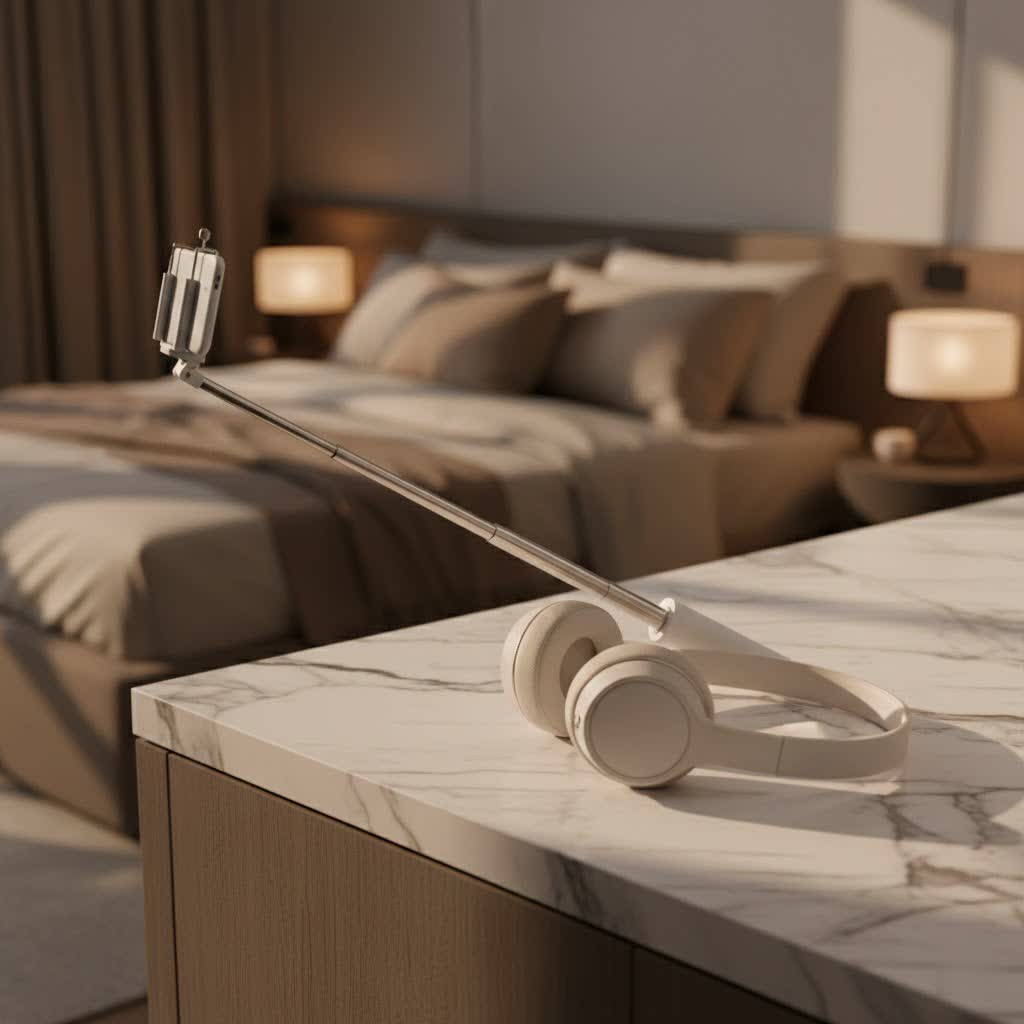
What Exactly is a Wired Selfie Stick?
At its heart, a wired selfie stick is an extendable monopod designed to hold your smartphone, allowing you to capture photos and videos from a greater distance than your arm’s reach. Unlike Bluetooth models that rely on wireless signals and batteries, a wired selfie stick establishes a direct, physical connection to your device, typically through its headphone jack. This direct link is what makes it so incredibly simple to operate.
How Does a Wired Selfie Stick Work?
|
Our Picks for the Best Selfie Stick in 2026
As an Amazon Associate I earn from qualifying purchases.
|
||
| Num | Product | Action |
|---|---|---|
| 1 | Selfie Stick Travel Tripod for Cell Phone with Remote Control and Phone Holder, Extendable Selfie Stick for iPhone, iPhone Tripod for Video Recording, 50 Inch, Black |

|
| 2 | ATUMTEK Selfie Stick Tripod, 3-in-1 Extendable Aluminum Phone Tripod with Detachable Bluetooth Remote, Compatible with iPhone 17/16/15/14/13/12/11/11 Pro/XS Max/XR and Samsung Smartphones, Black |
|
| 3 | TONEOF 68\" Magnetic Selfie Stick Tripod with Aluminum Strong Magnetic Holder for Magsafe, 360° Rotatable Travel Phone Tripod Stand with Metal Ring & Rechargeable Remote for iPhone/Android(Beige Gray) |
|
| 4 | TONEOF 68\" Magnetic Selfie Stick Tripod with Aluminum Strong Magnetic Holder for Magsafe, 360° Rotatable Travel Phone Tripod Stand with Metal Ring & Rechargeable Remote for iPhone/Android(Black) |
|
| 5 | Phone Tripod Stand with Bluetooth Remote, Selfie Stick for iPhone & Android, One-Click Open Portable Lightweight Tripod for Vlog Travel Photography (White) |
|
| 6 | Phone Tripod & Selfie Stick with Remote, Portable, Lightweight for Video Recording Vlog, Extendable Travel Tripod Stand Compatible with iPhone Android, Black, 62\" |
|
| 7 | MAGIC JOHN Phone Tripod, Portable Selfie Stick, Pocket Size Tripod for iPhone, Selfie Stick with Detachable Remote Control & 2 Fill Light for Photograph, Live Streaming, Video Recording |
|
| 8 | ULANZI SK27 Extendable Phone Tripod, 61\" Selfie Stick for iPhone, 2 in 1 Adjustable Tripod with Bluetooth Remote Cold Shoe Mount, Portable Phone Stand Lightweight for Travel Photo Video Stream Vlog |
|
| 9 | LỖI |
|
| 10 | SelfieShow Selfie Stick, Extendable Selfie Stick Tripod with Wireless Remote and Tripod Stand, Portable, Lightweight, Compatible with iPhone 15 14 13 12 Pro Xs Max X 8Plus, Samsung Smartphone and More |
|
The magic of a wired selfie stick lies in its clever use of your phone’s audio input. Most wired models feature a small 3.5mm audio cable (like a headphone jack) that plugs directly into your smartphone’s headphone port. On the handle of the stick, you’ll find a physical button. When pressed, this button sends a signal through the cable to your phone, mimicking a “volume up” command. Since most smartphone cameras are configured to trigger the shutter with the volume buttons, your phone interprets this signal as an instruction to take a picture. It’s a beautifully simple, plug-and-play mechanism that works seamlessly with many devices, especially those running iOS 4.0 and above or Android 4.0 and above.
“The beauty of the wired selfie stick is its mechanical simplicity,” explains professional photographer Mark Johnson. “It bypasses all the complexities of wireless pairing, giving you an immediate and reliable shot every time, provided you have the right port.”
The Unsung Benefits: Why Choose a Wired Selfie Stick?
While many have moved towards Bluetooth selfie sticks, the wired version still offers compelling advantages that make it a worthy contender for many photographers and casual users.
No Batteries, No Charging
One of the biggest headaches with wireless gadgets is keeping them charged. A wired selfie stick completely eliminates this concern. There are no batteries to worry about, no charging cables to pack, and no frantic searches for an outlet when you’re out and about. It’s ready whenever you are, making it an ideal companion for spontaneous adventures.
Instant Connection, No Pairing
Forget the tedious process of pairing Bluetooth devices. With a wired selfie stick, you simply plug the cable into your phone’s headphone jack, and it’s good to go. This instant connection saves time and frustration, especially when you want to capture a fleeting moment quickly.
Less Interference
Wireless connections, while convenient, can sometimes be susceptible to interference, leading to missed shots or connection drops. A wired selfie stick provides a stable, physical connection that is immune to such wireless hiccups. This means a more reliable trigger and consistent performance, ensuring you don’t miss that perfect group shot.
Affordability
Generally, wired selfie sticks tend to be more budget-friendly than their Bluetooth or multi-functional counterparts. Their simpler technology translates to lower manufacturing costs, making them an excellent option for those looking for an effective tool without breaking the bank.
Simplicity
In an increasingly complex tech landscape, the simplicity of a wired selfie stick is a breath of fresh air. It does one job, and it does it well, without extraneous features that can sometimes confuse or complicate the user experience.
The Realities of Wired Selfie Sticks in a Wireless World
Despite their undeniable charm, wired selfie sticks face significant challenges in today’s smartphone market. It’s important to acknowledge these realities to make an informed choice.
The Headphone Jack Dilemma
The most prominent hurdle for wired selfie sticks is the phasing out of the 3.5mm headphone jack on many modern smartphones, including recent iPhone and Samsung models. If your phone lacks this port, you’ll need a USB-C or Lightning to 3.5mm adapter to use a wired selfie stick. This adds an extra component and can diminish the “plug-and-play” simplicity that is a core advantage.
Limited Compatibility and Troubleshooting
While most wired selfie sticks are designed to work with a broad range of operating systems, some Android devices, due to their open-source nature and manufacturer customizations, might require specific camera settings adjustments (like assigning the volume key to trigger the shutter) or even a third-party camera app (such as Camera360) to function correctly. This can sometimes lead to troubleshooting efforts, which might be a deal-breaker for some users.
Physical Connection
The very thing that provides reliability – the physical wire – can also be a drawback. The cable can sometimes get in the way, tangle, or even be inadvertently pulled out during use. For dynamic shooting or vlogging, a wireless solution might offer more freedom of movement.
Fewer Advanced Features
Wired selfie sticks typically focus on basic shutter control. They generally don’t offer advanced features like zoom control, dedicated video recording buttons, or detachable remotes for truly distant shots, which are more common in Bluetooth models.
Choosing the Right Wired Selfie Stick for Your Needs
Even with the limitations, a wired selfie stick can be the perfect tool for many. Here’s how to choose one that fits your photography style.
Check Phone Compatibility
This is paramount. Ensure your phone either has a 3.5mm headphone jack or that you’re willing to use a compatible adapter. Also, quickly check your phone’s camera settings to see if the volume button can be set to act as a shutter release.
Build Quality & Durability
Look for a wired selfie stick made from robust materials like aluminum, which offers excellent durability and a lightweight feel. Pay close attention to the phone mount – it should have a strong, spring-loaded clamp with rubberized grips to securely hold your device without scratching it. A 1/4-inch screw mount is a bonus if you plan to use compact cameras.
Length & Portability
Consider both the fully extended length and the collapsed size. A good wired selfie stick should offer a decent reach (typically 25-40 inches) for wide-angle and group shots, while also folding down compactly enough to fit easily into your bag or pocket.
Ergonomics
A comfortable, ergonomic handle is crucial for steady shots, especially during extended use. A wrist strap is also a valuable safety feature, preventing accidental drops.
Bonus Features
While basic, some wired selfie sticks might still offer features like a rotating phone mount for switching between portrait and landscape modes, or even simple fold-out tripod legs for added versatility.
Pro Tips for Perfect Shots with Your Wired Selfie Stick
As a seasoned photographer, I know that even the simplest tool can produce stunning results with the right technique. Here are my top tips for maximizing your wired selfie stick:
- Angle & Composition: Don’t just point and shoot. Experiment with angles. A slightly higher angle can be more flattering for portraits, while a lower angle can create dramatic shots. The extended reach allows for wider group photos and more expansive backgrounds, adding context to your images.
- Stability is Key: While wired sticks offer a stable connection, keeping the stick itself steady is crucial. Hold the handle firmly with both hands if possible, or use the wrist strap for added security. Practice slow, controlled movements for smooth video footage.
- Mind Your Lighting: Good lighting is the foundation of great photography. Position yourself so the light source (sun, window) illuminates your face evenly. Avoid harsh backlighting unless you’re going for a silhouette.
- Experiment with Perspective: Use the extended reach to capture unique perspectives. Shoot over crowds at concerts, get a bird’s-eye view of a landscape, or capture dynamic low-angle shots that would be impossible otherwise.
- Post-Processing Power: Don’t underestimate the power of editing. Even a quick tweak to exposure, contrast, and color in your phone’s photo editor can elevate your wired selfie stick shots from good to great.
Caring for Your Wired Selfie Stick: Longevity Tips
To ensure your wired selfie stick remains a reliable companion for years, a little care goes a long way.
- Clean Regularly: Wipe down the telescopic pole and phone mount with a soft, damp cloth to remove dust and grime. Pay special attention to the phone holder’s grips to maintain their effectiveness.
- Inspect the Cable: Periodically check the 3.5mm cable for any fraying or damage, especially near the jack and where it connects to the stick. A damaged cable can lead to connection issues.
- Proper Storage: When not in use, retract the stick fully and store it in a dry, safe place away from extreme temperatures. If it came with a pouch, use it to protect the stick from scratches.
Frequently Asked Questions
Q: Can I use a wired selfie stick with an iPhone without a headphone jack?
A: Yes, but you will need a Lightning to 3.5mm headphone jack adapter. This adapter connects to your iPhone’s charging port and provides a 3.5mm jack for the selfie stick.
Q: Are wired selfie sticks better than Bluetooth ones?
A: Neither is inherently “better”; it depends on your needs. Wired selfie sticks offer instant connection, no charging, and are generally more affordable. Bluetooth selfie sticks offer wireless freedom, no reliance on the headphone jack, and often more advanced features, but require charging and pairing.
Q: What if my wired selfie stick isn’t working?
A: First, ensure the 3.5mm cable is fully plugged into your phone’s headphone jack (or adapter). Check your phone’s camera settings to ensure the volume button is set to trigger the shutter. For some Android phones, you might need a third-party camera app like Camera360 and enable the volume key shutter function within that app. Also, test the stick with another compatible phone if possible to rule out a device-specific issue.
Q: How do I know if my phone is compatible with a wired selfie stick?
A: Your phone is compatible if it has a 3.5mm headphone jack. If it doesn’t, you’ll need the appropriate adapter (Lightning for iPhones, USB-C for many Androids). Most smartphones with iOS 4.0+ or Android 4.0+ will work, though some Android devices might require minor settings adjustments or a specific camera app.
Q: Can I use a wired selfie stick for video recording?
A: Typically, the button on a wired selfie stick is designed to trigger the camera shutter for photos. While some phones might allow the volume button to start/stop video recording, this functionality is less common and might vary by device and app. It’s best to check your phone’s camera settings or app capabilities.
Unleash Your Creativity with the Wired Selfie Stick
In a world constantly pushing for the next big thing, the humble wired selfie stick stands as a testament to the enduring power of simplicity and reliability. It might not boast the latest wireless tech, but for those who value instant gratification, a battery-free experience, and straightforward operation, it remains an invaluable tool. Embrace its charm, understand its quirks, and you’ll find that this classic accessory can still help you capture stunning photos and videos, expanding your creative horizons one perfectly framed shot at a time. Visit Spaod.com for more in-depth reviews and tips to elevate your smartphone photography game!
